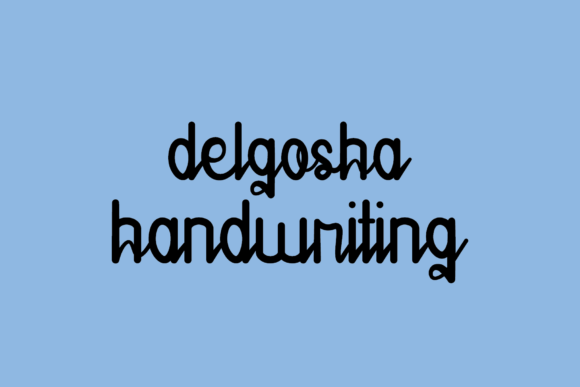
Delgosha: A Whimsical Handwritten Font for Creative Projects
I was working on a brand identity project for a small bakery last week, and I needed something that would feel warm, inviting, and personal. I opened my font library and stumbled across Delgosha. At first glance, it looked like just another script font, but after testing it in a few different contexts, I realized it had a unique charm that set it apart from the rest.
A Friendly Touch for Branding
Delgosha is a fun and friendly handwritten font with a whimsical and quirky personality. It feels like a handwritten note from a friend — warm, approachable, and full of character. The curves and flourishes give it a sense of playfulness, while the overall structure keeps it readable enough to be useful in branding work.
When I used it as a logo concept for the bakery, it immediately gave the brand a sense of authenticity. The font felt like it could have been written by the baker themselves, which added a personal touch that resonated well with the target audience.
Testing Delgosha in Real Design Scenarios
I tested Delgosha across several design elements to see how it performed in different applications. On a packaging mockup, it worked beautifully on a label for a signature cookie box. The playful nature of the font complemented the handcrafted feel of the product.
On a business card, Delgosha added a nice contrast when paired with a clean sans-serif font for the supporting text. It didn’t overpower the information but instead drew attention to the name and tagline in a way that felt intentional and stylish.
For social media graphics, I used Delgosha in a short phrase for an Instagram post. The font stood out against a bold background and helped create a visual hierarchy that guided the viewer’s eye naturally.
Where Delgosha Shines Best
Delgosha is best suited as a display font or headline font. It works exceptionally well for short phrases, logos, brand tags, and accents in editorial design. However, it's not ideal for long paragraphs of body text due to its informal and decorative nature.
In web design, Delgosha can be used for hero sections or call-to-action buttons where a bit of personality is needed. It adds a human touch without sacrificing professionalism, especially when paired with a more structured typeface for supporting content.
If you're working on a creative studio identity, handmade shop branding, or a local restaurant logo system, Delgosha can bring a sense of warmth and individuality that makes your brand stand out.
Font Pairing and Practical Considerations
When pairing Delgosha with other fonts, I found that it works well with a modern sans-serif font for balance. For example, using Delgosha for headlines and Helvetica Neue for body text created a nice contrast between the playful and professional tones.
It also pairs nicely with serif fonts in more traditional settings, such as a boutique brand identity. The combination gives the design a refined yet approachable feel.
Before committing to Delgosha in final client work, I recommend testing it in different sizes and colors. Make sure it looks good both digitally and in print, and always check the commercial licensing to ensure it's appropriate for use in brand identity, packaging, websites, or merchandise.
Limitations and When to Avoid Delgosha
While Delgosha brings a lot of charm to a design, it may not be suitable for all projects. Due to its handwritten style, it might not be the best choice for formal corporate use, legal documents, or any situation where clarity and legibility are paramount.
Additionally, it's important to avoid using it at very small sizes where the details might become lost. For body text, a more structured font is usually better to maintain readability and ensure a professional appearance.
If you're looking for a font that adds personality without compromising usability, Delgosha is worth considering. Just make sure it fits the tone and needs of your specific project before making it a core part of your brand identity.